
The Local newsletter is your free, daily guide to life in Colorado. For locals, by locals.
Mark McIntosh was running out of time. It was summer 2024, and the former Denver sportscaster, who spent 18 years calling games and interviewing athletes on KCNC (Channel 4), was living with amyloidosis, a rare disease where misshapen clumps of protein build up in your organs. Chemotherapy kept it at bay, but the condition destroyed his kidneys, and he needed dialysis to stay alive. “I was chained to a machine for four hours at a time, three days a week,” he recalls. Dialysis is grueling and expensive, plus the machinery is a poor substitute for the real thing, leaving patients progressively sicker and more fatigued.
McIntosh, ever the journalist, used some of those long hours at the dialysis center to read about the dire need for organ donation in the United States, where approximately 13 people die every day while waiting for a transplant. According to Donor Alliance, the nonprofit that coordinates organ procurement in the state, roughly 1,300 Coloradans are waiting for transplants at any given time; 85 percent of those need a kidney.
Meanwhile, millions of us are walking around with an extra kidney we don’t need, and the surgery to donate one is relatively quick and easy: a minimally invasive procedure that usually entails a one-to-two-day hospital stay, rarely with any long-term health effects. Yet living donation is still relatively rare: last year, 76 percent of kidney donations nationwide came from deceased donors, whose transplanted organs last five fewer years on average than those from the living. “I really started to realize, ‘Holy smokes, this is a growing crisis, and most people don’t know,’ McIntosh says. He vowed that if he survived, he would try to repay the gift by educating others.
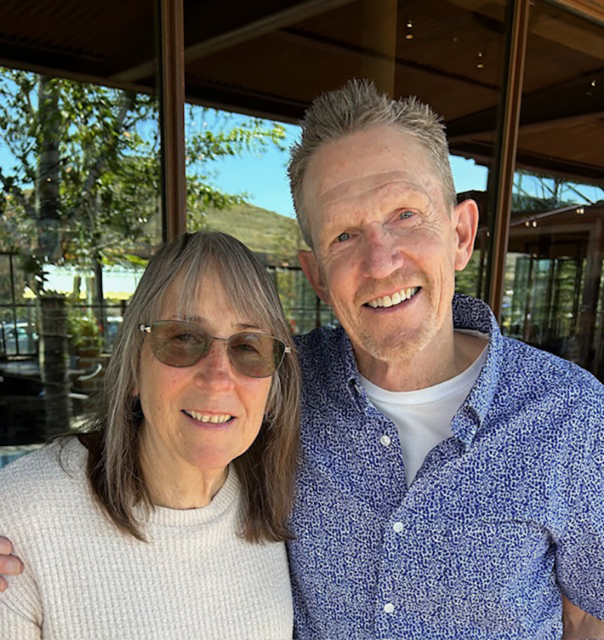
Meanwhile, about 100 miles south of Denver in Pueblo West, Cathie Hitchcock, a 68-year-old former dog groomer and school bus driver, was waiting to learn if she could save the life of her husband, Kirk, whose kidneys were failing due to an autoimmune disease. Their blood types didn’t match, so she couldn’t help Kirk. Two of his siblings offered to donate theirs, but other health problems disqualified them. That’s when a doctor explained the concept of a kidney voucher: Cathie could donate to a stranger in need and receive a “golden ticket” to shorten Kirk’s wait time in return. She said yes right away.
Getting approved took a full year—donors must undergo extensive health testing, plus Cathie had to lose about 25 pounds to qualify. But she dutifully completed every requirement, and on June 12, 2024, she underwent surgery at AdventHealth Porter in southeast Denver.
As she woke up in her hospital bed, Cathie knew nothing about the person her kidney was being stitched into in an adjacent operating room. Strict privacy regulations keep it that way unless both donor and recipient decide to get in touch later. But she learned McIntosh’s identity through a chance encounter: A film crew was in the waiting room, ready to capture footage of his recovery, and Cathie’s sister, waiting in that same room, overheard something about a transplant and went over to chat. She relayed the news to Cathie, who immediately recognized the name Mark McIntosh. “I know him,” she remembers saying. “I watched him on TV all the time.” A lifelong University of Colorado Boulder football fan, Cathie had often tuned in to McIntosh’s broadcasts.
Both agreed to meet as soon as they could, and on September 26, 2024, at a restaurant in Lone Tree, they tearfully embraced. “I’ll never forget that hug,” says McIntosh. “Just to realize that a part of her body is in me, that she has given me new life…” He trails off. “Cathie is my angel.”
Thanks in part to Cathie’s voucher, Kirk received his new kidney earlier this month. He’s recovering well, and McIntosh and Cathie are both in good health, too.
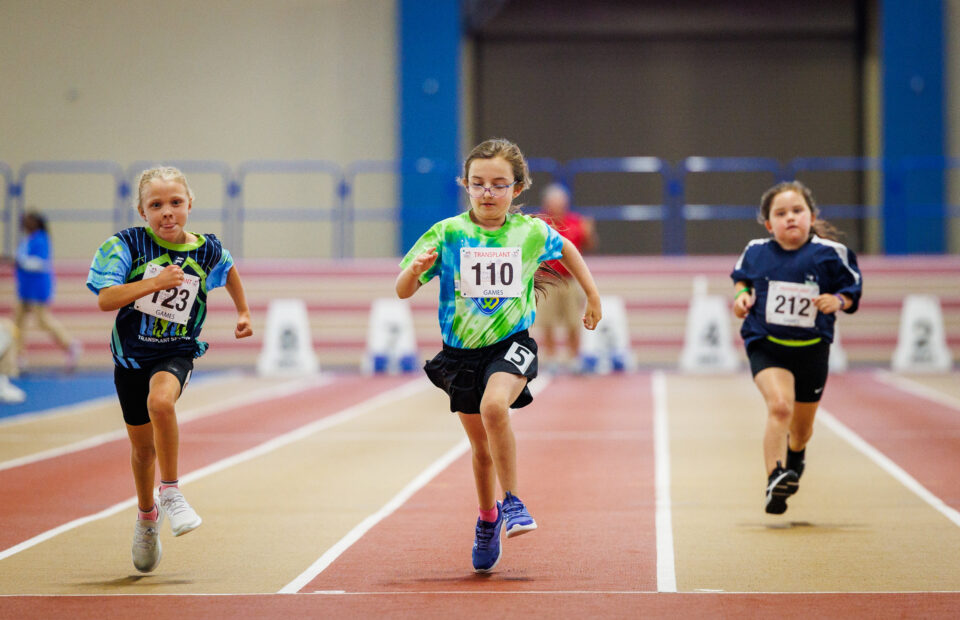
This week, they’ll join 12,000 other organ donors, recipients, and advocates at the Transplant Games of America (June 18–23) at the Auraria Campus in Denver. The nonprofit event aims to raise awareness for organ donation and celebrate the gift of life. Organizers also hope to break the Guinness World Record for most donor-recipient pairs together at a time (965 such people gathered in Israel earlier this year). Athletes at the games, who travel from all 50 states and a handful of other countries, will participate in more than 20 sports, from ballroom dancing to poker playing. Cathie plans to compete in the pickleball tournament, and McIntosh, who chairs the games’ host committee, will be golfing.
True to his promise, McIntosh has devoted considerable energy to advocacy, having launched a traveling nonprofit program called Drive for Five. “Our goal is to try to recruit 5,000 organ donors and save 5,000 lives,” he says. At least two more Coloradans have already donated their kidneys as a result of McIntosh’s advocacy: Dianne Chorny and John Sweeney. McIntosh, who has a fondness for catchphrases, is forever encouraging those he meets to “share your spare” or a “sliver of your liver” (living liver donation, though less common, is also possible: Donors give half their liver, and the organ grows back and resumes full function within eight weeks).
One of the best parts of his recovery, McIntosh says, has been joining a “transplant tribe” of other Coloradans whose lives were changed by donation. “At the Transplant Games, when you look around and see there’s 50 other recipient and donor pairs in the room, it’s pretty amazing,” he says. He and Cathie are now friends for life. They’re looking forward to hanging out together at the Games—and they text each other after every Buffs football game.
